












The heat would bounce off Ébrié Lagoon in Abidjan and cause a mirage. Two kilometres away, Tchanga the giant made his way to the Culture Palace, the venue of the 2020 Marché des Arts et du Spectacle Africain (MASA), which took place from 7 to 14 March.

Tchanga was the official float of the street parade and a symbol of African unity and peace. He was accompanied by local and international dance troupes and acrobats in colourful costumes. The street parade was a new concept introduced by MASA director Prof Yacouba Konaté, who said the parade could offer some of the experience of the performing arts market to those who could not make it to the main venue.
“We needed people to know about MASA and also experience part of it," he said. "Normally, not everyone makes it to the venue and those who do leave early. The idea was well received and I think we will be doing it for every event going forward."
The La Zone stage was another new addition to the market, showcasing contemporary artists like rappers and DJs. The artists were programmed by Didier Toko, the organiser of the Douala Music'Art Festival in Cameroon.
“During the last edition many young artists thought MASA was not ‘sexy' enough and they suggested that we programme younger artists. This is something that we hope to carry on in the next edition,” Konaté said.
This year's market featured 200 shows and hosted more than 1 700 artists on eight stages, including musicians, dancers, storytellers, slam poets and actors. To cover the entire event would require a busload of reporters writing 24/7, but this reviewer believes she caught some of the most memorable performances at this year’s event.
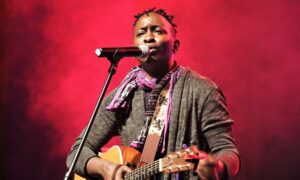
M’Bouile Koite gave an unforgettable concert with his strident and soulful vocals. The kora was a prominent element of his performance, but he also utilised guitars and percussion to present his Malian roots with a sense of expert balance. It would be foolish to expect anything less than a flawless show from a griot.
The sound of the djembe is a spirit-lifting remedy that is hard to beat, with Ivorian Baba Touré and the Bendia troupe delivering a healing performance that demonstrated the power of West African drumming. Picture this: A master playing the lead djembe and eight of his students backing him up with djembes and dunduns. The troupe featured a female vocalist who echoed Touré's beats as he engaged the audience.
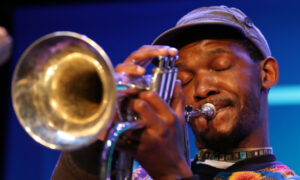
Ivorian rapper Sol'e delivered a supremely elegant performance, demolishing the barriers between jazz and hip hop by letting the two forms intermingle freely. The audience loved the free-flowing poetic conversation that the rapper presented. Sol'e is undoubtedly an artist with ambition and brilliance to back it up.
Watching Ivorian Tchefary, one could entertain the idea of a Lucky Dube doppelgänger. His movement, the flying dreads and facial expressions were quite comparable to the late South African reggae musician. Tchefary offered a good selection from his discography, which left the dreadlocked audience shaking their heads to the beat; even those with shaved heads enjoyed the show. After all, Jamaica's Morgan Heritage said that one does not need dreadlocks to be a rasta man. Tchefary's female on-stage companion provided the subtlety required by a backing singer and the resulting balance was perfect.
Protest music was also presented at this edition, with Martial Pa'nucci and Monza digging deep to convey the issues besieging Congo-Brazzaville and Mauritania, respectively. Their lyrics, which are critical of their governments, have made them polarising figures in their countries. Pa'nucci is presently in exile in Burkina Faso while Monza has not performed in Mauritania for almost a decade.
MASA challenged the homogeneous picture of male bands dominating African music festivals. The organising team is mainly made up of women, some of whom were on stage-management duties. On 8 March, they programmed only female-led bands to commemorate International Women's Day.
Rama from Burkina Faso was one of the highlights this year. He stage charisma and singing place her shoulder to shoulder (in terms of uniqueness and not height) with Malian singer Oumou Sangaré. She effortlessly played the dozo n'goni instrument and was backed by a kora, bass, keyboards and drums. Her set started as a serene meditation and spontaneously combusted into a cacophonous eruption.
Another highlight was Kandy Guira. She was born in Ivory Coast, raised in Burkina Faso and now lives in France. Guira incorporates all these cultures into her music and the result is a frenetic performance full of body movements. Her set revolved around heavy percussion and a DJ who occasionally delivered electronic beats.
MASA's 2020 line-up heavily featured artists from West and Central Africa. Mokoomba (Zimbabwe) and Eddy Kenzo (Uganda) were the only artists from purely Anglophone countries, and their performances were scheduled late into the night with smaller audiences watching their performances.
“I watched Mokoomba and they are brilliant musicians, even though they performed very late," Konaté said. "Our mission ahead of the next edition is to promote MASA in Anglophone countries so that we can programme more artists from those regions.”
The 12th edition of MASA will take place in 2022.


Most popular
29 Jun 2026

54 African Mamas bring ‘I Can Beyond the Mic’ Summit to SA for landmark 2026 Edition
17 Jun 2026

Universal Music Group rejects Bill Ackman takeover proposal
02 Jun 2026

Open call: ESWACOS creative industries development fund grants
02 Jun 2026

Black Coffee marks major European performances in France, UK
02 Jun 2026

Tyla and Future drop ‘Game Time’ for official FIFA World Cup 2026 Album
02 Jun 2026


Disclaimer: Music In Africa provides a platform for musicians and contributors to embed music and videos solely for promotional purposes. If any track or video embedded on this platform violates any copyrights please inform us immediately and we will take it down. Please read our Terms of Use for more.

Subscribe to our monthly Newsletter
Follow us on social media


Please log in to post a comment.