


NEFCISA
NEFCISA

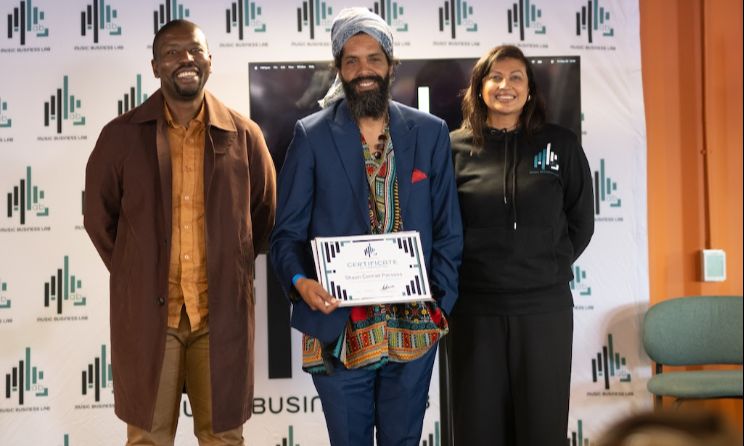
The Music In Africa Foundation (MIAF) is proud to announce its partnership with the Industrial Development Corporation (IDC) as a Strategic Implementing Partner (SIP) for its Social Employment Fund (SEF). Through this collaboration, MIAF is launching a new national programme designed to create jobs, address skills gaps, and strengthen South Africa’s creative industries — in line with the SEF’s overarching goal to generate work for the common good and build community value through employment, social contribution, and inclusive economic participation. Operating under the banner NEFCISA (National Employment Facility for Creative Industries in South Africa), the initiative will recruit and train participants, match them with host organisations, and place a minimum of 1 000 workers across the country. Key Objectives: Support employment and entrepreneurship in the creative industries. Offer skills development and training programmes. Foster partnerships between public and private creative sectors. Promote South African creativity at both provincial and national levels Foster community development through social contribution.

ACCES
ACCES

ACCES has stamped its authority as Africa’s leading music trade event. At the 2019 edition in Accra, the conference brought together more than 1 200 delegates from about 50 countries on the continent and beyond. The conference also hosted 76 showcasing artists from Africa and the diaspora, who got to perform for an influential audience at two top live venues in the Ghanaian capital. Apart from live showcases, the event features panel discussions, presentations, exhibitions, pitch sessions, Q&A sessions with prominent musicians and visits to key music industry hubs in the host city. Many of these activities will be planned for ACCES 2021, with the ACCES team already exploring a tailor-made programme that will cater for the specific needs of the local music industry amid the pandemic. ACCES is organised by the Music In Africa Foundation, a non-profit and pan-African organisation, in partnership with Siemens Stiftung and Goethe-Institut.

Gender@Work
Gender@Work

Music In Africa Gender @ Work is a three-year training programme aimed at upskilling and increasing the participation of female professionals in the African music sector. Launched by the Music In Africa Foundation (MIAF) in April 2019, the programme is connected to the MIAF’s ACCES music conference – a pan-African event held in a different African country every year. This connection enables the programme to reach new participants in a different African country every year. The programme marks the beginning of a more concerted effort by the Foundation to support the participation and inclusion of women in all facets of its programmes and the music sector in Africa as a whole. Over the three years, the programme will aim to address gender imbalances in the sector through training, lobbying, facilitating knowledge exchange and dialogues that foster the interest of women. The broader objectives of the programme are to: Provide industry training for women on critical music industry skills, focusing on: Stage management Electronic music production and recording Music business management Technical knowledge Provide an opportunity for both professional and aspiring women to benefit from the Music In Africa network and its broad range of activities in 2019, 2020 and 2021. Provide a solution-based platform in the form of a round table at ACCES with a view to identify challenges, discuss opportunities and lobby for the interests of female practitioners. Offer participants the opportunity to benefit from programmes offered by MIAF’s partners. Increase access to educational materials. Integrate participants in the broader ACCES programme to maximise experience and exposure to the industry. Record and present training materials on the www.musicinafrica.net, including but not limited to tutorials, templates and other best-practice materials. Communicate women-based themes that support the initiatives and messages of the programme. MAIN TRAINING ACTIVITIES Training in first country (Ghana): In the first year, participants will be trained on all aspects of stage management by a team of experienced stage managers from 10 to 17 November 2019. The programme will offer robust classroom training as well as practical, hands-on training in which participants will also be given the opportunity to manage various aspects of the ACCES performance programme. Training in second country: The second training iteration will take place at ACCES 2020 when the programme will diversify its course to include music production lessons and training on other music business topics. A round-table platform will also be introduced to coincide with the ACCES programme. Training in third country: The third training iteration will take place at ACCES 2021 in a different country, offering an advanced course. HOW DO YOU GET INVOLVED?  As a participant, facilitator or trainer: The programme enrolls up to 12 trainees every year. All opportunities are advertised publicly on this website, and will be added to this page. Please keep checking this page for new calls (below under UPDATES & CURRENT OPPORTUNITIES). As a partner Please contact Claire Metais at claire@musicinafrica.net. APPLY The call for applications for 2020 will be announced soon. The Music In Africa Gender @ Work programme is made possible with the support of the Prince Claus Fund, Siemens Stiftung and Goethe-Institut.

Sound Connects Fund
Sound Connects Fund

For cultural and creative practitioners and organisations operating in southern Africa, access to funding remains a major challenge. The COVID-19 pandemic has also had a massive impact on government policy, spending and the economy in general, and has seen spending on culture being moved further down the list of priorities. Further, the cultural and creative industries repeatedly cite four main areas where investment is needed for growth, which are increased visibility, mobility including access to new markets, finance and support structures.

Instrument Building And Repair Project

Experience the Vibrations African Instruments Exhibition online in 3D

Reviews

Science Student: Olamide has and eats his cake

27 Feb 2018 - 14:31

cc-img flag-img

The new Olamide video opens with some terrible acting, goes through some rather awful costume and overwrought choreography choices and ends with a decent version of the popular shaku shaku dance.

Olamide appeases Nigerian authorities with Science Student video. Photo: YBNL

But these are surplus features. Once ‘Science Student’ got banned, its video was mostly expected to answer a single question: How will Olamide respond to the accusation by the Nigerian authorities that his song promotes drug abuse?

He gave an answer on social media, saying: “Don’t abuse alcohol. Stop mixing what you don’t know about. Live responsibly and drink responsibly”. But if that message was telling his listeners, the video shows him living by example.

After their vehicle stops moving at night, Olamide and friends head towards a blinking light. A sudden burst of bad CG bats scares his friends away, leaving the artist to go alone. He ends up at a decrepit building housing a lab. There a group of the dancing undead do some chemistry. We can accept that the undead are some of the planet’s best dancers—at least since Michael Jackson’s ‘Thriller’—but why exactly do they need stoichiometry?

The idea is perhaps metaphor: the undead represent drug addicts: this, Olamide seems to say, is what happens when you mix substances for the purpose of intoxication. If the point is unclear, some of the dancers are aroused from sickbeds as Olamide walks through the building.

To hammer the point home, one guy has his head aflame and several walls are inscribed with anti-drug-use messages. A cup containing some substance handed to the rapper is discarded at the same spot where “Say no to Drugs” is inscribed. Apparently, the message on the wall should be: Say No to Subtlety. The over seven-minute video then ends with Olamide bursting into daytime, followed by a garishly dressed troupe dancing to a mix of the music.

If the Nigerian authorities have overdone their zealousness, Olamide is overplaying his clearly hypocritical holiness. Fans will remember that the last time he flung a cup in public, at a recent edition of the Headies, he was already inebriated. And he has sang way too many songs in praise of vice for anyone to believe in his rehabilitation.

Indeed, you get the idea that Olamide is trying hard to prevent any misinterpretation of a message he almost certainly never had when he began recording the song. Does anyone really think Olamide was seeking to tell his fans not to use intoxicants? At best, the plan was to capture a reality that, according to This Day, has seen “500 000 bottles of codeine…consumed by young Nigerians across the country, same with the intake of tramadol, rohypnol, marijuana, and other opioids”. But from song to video, respect for the NBC ban has transformed Olamide as messenger to Olamide the messiah.

It has worked well for him. The song, spurred by the ambiguity of its lyrics and its shaku shaku compliant production, quickly became a hit. It also earned him a ban, which made some curious enough to seek the song. Now its video has appeased the authorities with its over-flogged anti-drug message. The video also continues Olamide’s use of gothic elements and his flirtation with horror aesthetics—as seen in videos ranging from 2012’s ‘Ilefo illuminati’ to 2013’s ‘Voice of the Street’ to ‘The Intro’ from his 2016 album The Glory.

Thus without too much of a deviation from what he has always done, Olamide has turned controversy to conquest. Not bad for a song that, unless something else happens, will never again be heard on Nigerian radio. It makes it all the more unfortunate that someone didn’t think to cut out a chunk of the time spent doing that ludicrous dance routine in clownish costume .

Please log in to post a comment.

Most popular

Disclaimer: Music In Africa provides a platform for musicians and contributors to embed music and videos solely for promotional purposes. If any track or video embedded on this platform violates any copyrights please inform us immediately and we will take it down. Please read our Terms of Use for more.

newsletter banner

Subscribe to our monthly Newsletter

Follow us on social media

This site is registered on wpml.org as a development site. Switch to a production site key to remove this banner.