
Guitar lesson 5: Intervals – Minor and Major 2nds and 3rds

By Global Music Academy
23 Feb 2016 - 09:43


Intervals are the basic building blocks in music. All chords, scales and modes are defined by the intervals that we use to construct them.
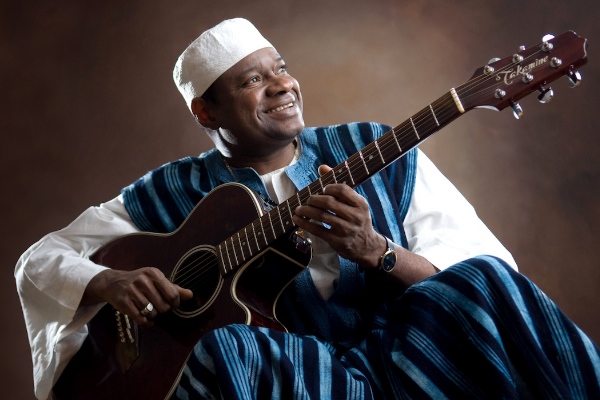
The following series of exercises will help you develop dexterity and flexibility when playing intervals. It is extremely important to practice these intervals so you can play them smoothly all the way up the fretboard.
Minor 2nds (or Half Steps)
The minor 2nd (or half step) is the smallest interval in tempered music. There are 12 half steps in an Octave. We call all these 12 notes the chromatic scale. The word derives from the Greek word Chroma, which means color. So the chromatic scale contains all the colors possible in the tempered or 12-tone system. A chromatic line is any sequence of half steps (minor seconds) played ascending or descending (two or more half steps in a sequence). We also speak of moving up or down chromatically a half step.
Exercise 1: Chromatic/minor second (m2)/half-step interval exercises on one string up and down
Play the chromatic (minor second intervals) exercise moving up and down the fingerboard. Notice where your finger muscles have been weak and repeat those particular finger movements. Make sure that all your four fingers play actively. Start the exercise slowly and pay attention to keeping the tempo consistent throughout the exercise. Once you have mastered it at a slow tempo you may slowly increase the speed. The pluck hand performs the down and up picking at all times.
[video:https://youtu.be/fbGkz6kC0Lc autoplay:0]
For ease of reading it has been notated an octave lower than played in the video. Start the exercise on the first fret of the high E string with the first finger.
Major 2nds (or Whole Steps)
The Major 2nd consists of two half steps or minor 2nds. Many scales and modes are built using combinations of Major (whole step) and Minor 2nds (half step). It is impossible to play these scales or modes fluently if you cannot play the whole steps and half steps from which they are constructed fluently.
Exercise 2: Major 2nd (whole step) interval exercises on one string up and down
Play the chromatic Major Second intervals exercise moving up and down the fingerboard. Notice where your finger muscles have been weak and repeat those particular finger movements. Make sure that each of the four fingers play actively. Start the exercise slowly and pay attention to keeping the tempo consistent throughout the exercise. Once you have mastered it at a slow tempo you may slowly increase the speed. The fret hand performs the down and up picking at all times.
[video:https://youtu.be/zec5OV5-RKQ autoplay:0]
Fingerings: 1 – 3 – 2 – 4 etc.
For ease of reading it has been notated an octave lower than played in the video. Start the exercise on the first fret of the high E string with the first finger.
Try to regroup the notes in the exercise rhythmically to obtain a different and interesting musical experience.
The Minor Third Interval
The minor 3rd consists of 3 half steps. It is an interval that occurs in some scales and modes and it is also an essential building block for many different kinds of chords. The minor 3rd can also define the quality of a scale or mode when it is built from the root of the scale or mode. This is often the third note of the scale or mode. The minor 3rd interval occurs frequently in melodies as well as chords and it is essential to be able to recognize it and play it fluently on the guitar.
Exercise 3: Single string minor third (m3) interval exercises up and down the fret board
This exercise will help to enhance the motor movement between non consecutive fingers as well as familiarizing you with larger intervals (leaps) on the fingerboard. Start the exercise slowly and pay attention to keeping the tempo consistent throughout the exercise. Once you have mastered it at a slow tempo you may slowly increase the speed. The fret hand performs the down and up picking at all times.
[video:https://youtu.be/TQvXWRDVclA autoplay:0]
Fingerings: 1 – 4, 1 – 4 etc.
For ease of reading it has been notated an octave lower than played in the video. Start the exercise on the first fret of the high E string with the first finger.
The Major Third Interval
The Major 3rd interval consists of 4 half steps. It is an interval that occurs in some scales and modes and it is also an essential building block for many different kinds of chords. The Major 3rd can also define the quality of a scale or mode when it is built from the root of the scale or mode. This is often the third note of the scale or mode. The Major 3rd interval occurs frequently in melodies as well as chords and it is essential to be able to recognize it and play it fluently on the guitar.
Exercise 4: Single string Major 3rd (M3) interval exercises up and down the fret board
This exercise will help to stretching your fingers as well as familiarizing you with playing larger intervals (leaps) on the fingerboard. Start the exercise slowly and pay attention to keeping the tempo consistant throughout the exercise. Once you have mastered it at a slow tempo you may slowly increase the speed. The fret hand performs the down and up picking at all times.
[video:https://youtu.be/spbB5d5rx08 autoplay:0]
Fingerings: 1 – 4, 1 – 4 etc.
For ease of reading it has been notated an octave lower than played in the video. Start the exercise on the first fret of the high E string with the first finger.
Here it is necessary to stretch the 4th finger to cover the range of 5 frets (one more fret than with minor 3rds).
Single string combination of intervals exercises up and down the fret board
Here is an exercise combining Major and Minor 2nds and 3rds.
Exercise 5: A combination exercise of m2, M3, m3 and M3 intervals
This exercise will help in developing a good control over the left hand fingers. Start the exercise slowly and pay attention to keeping the tempo consistent throughout the exercise. Once you have mastered it at a slow tempo you may slowly increase the speed. The fret hand performs the down and up picking at all times.
[video:https://youtu.be/KNiXP0KrNZ8 autoplay:0]
Fingerings: 1 – 2, 1 – 3, 1 – 4, 1 – →4
The arrow before the 4 indicates the extended fourth finger for the Major 3rd instead of the minor 3rd.
Conclusion
Exercises that are limited to one or two strings are worth doing at all stages of your development as a player. By practicing these exercises slowly and carefully every day it will become much easier to hear and identify the different intervals and it will be easier to practice and memorize scales, modes and chords and play them with fluency.


Most popular

Open call: AIR Festival 2026 seeks local talent in Knysna
04 Feb 2026

AI music firms, major labels clash over ‘Walled Garden’ model
04 Feb 2026

YouTube restricts background play to Premium users across all browsers
04 Feb 2026

Bruce Resnikoff appointed UMe chairman, Jamie Krents named CEO
04 Feb 2026

Interview: South African artist Nomisupasta
03 Feb 2026

Apple Music flags 2 billion fraudulent streams amid AI audio surge
03 Feb 2026


Disclaimer: Music In Africa provides a platform for musicians and contributors to embed music and videos solely for promotional purposes. If any track or video embedded on this platform violates any copyrights please inform us immediately and we will take it down. Please read our Terms of Use for more.

Subscribe to our monthly Newsletter
Follow us on social media


Please log in to post a comment.